
Okay Fine is an educational tool with task-shifting care that is affordable, portable, destigmatizing, and engaging.
Our platform provides a healthy alternative for social media that teaches productive emotional tracking and supports social-emotional development, expression, and resilience.
Self-help, self-love, and selfless selfies with purpose.
Okay Fine

* Maybe not, so let's work through this together.
Inspired by problem-solving therapy and community-based care, our tools were developed to teach individuals how to articulate which emotions they are feeling and enhance their emotional literacy.
TOOLS
“You can't move forward without being vulnerable. Vulnerability connects you to the rest of the world." — Dr. Phil Stutz



SUMMARY
“The delicate shades of feeling, of reaction, are the result of communication.” — John SteinbeckOKAY FINE is an empathy app designed for sharing emotions that help advance mental health research and education.
Inspired by problem-solving therapy and community-based care, our tools were developed to teach individuals how to articulate which emotions they are feeling and enhance their emotional literacy.
We provide users with emotional assets to find insight in awareness to help shape our emotional reactions in more thoughtful and constructive ways. [1]
Our platform is a tool for therapists and their patients, and provides support for individuals (personal), groups (private), and the community as a whole (public).
Personal and private tiers provide additional and expanded tools that are available through single payments or recurring subscriptions. Private and public options also include group and community Commons for connecting with individuals through culture: language, religion, environment, and similar life moments.

There are around 45,000 psychiatrists [2] for 333 million Americans, which translates to about 135 psychiatrists for every million people. 40 million American adults are affected by anxiety — the most common mental illness [3] in the country — one-third [4] of whom will experience an anxiety disorder at some point in their lives.
Despite the demand, The National Council for Mental Wellbeing [5] revealed that the majority of Americans (74%) do not believe mental health services are accessible for everyone, and about half (47%) believe options are limited.
These beliefs are driven by several perceived barriers in Americans’ ability to seek mental health treatment, including: High Cost and Insufficient Insurance Coverage; Limited Options and Long Waits; Social Stigma; and Lack of Awareness. [5]
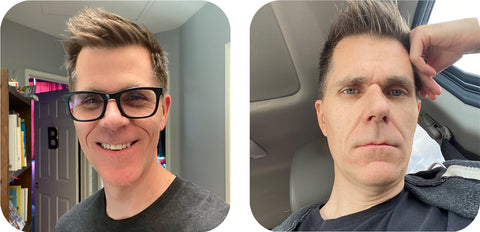
OKAY FINE is an educational tool with task-shifting care [6] that is affordable, portable, destigmatizing, and engaging.
Our platform provides a healthy alternative for social media that teaches productive emotional tracking and supports social-emotional development, expression, and resilience.
Self-help, self-love, and selfless selfies with purpose.
OKAY FINE mental health metrics consider the context of past patterns to support continuous improvement. Our emotional assets also provide: geographical statistics to locate where funding and resources are needed; quantitative analysis to define emotional trends; and thoughtful tools to promote societal acceptance and empathy for recognizing and sharing emotions.
Leveraging education, knowledge, and scientific inquiry as key social change agents, our goal is to partner with Accountable Care Organizations (ACOs), community-based nonprofits, medical research groups, public health universities, and local, state, and federal health departments to advance mental health research and education.
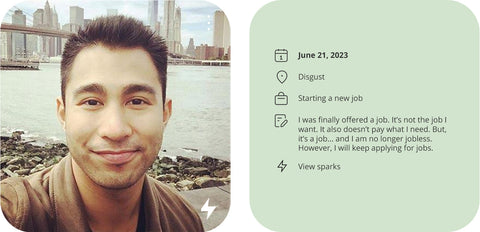
Russian artist Wassily Kandinsky described orange as red brought nearer to humanity by yellow. [7]
Because emotions can be difficult to identify and understand, we declare Orange as the OKAY FINE company color. Orange wasn’t seen as a separate color until relatively recently and colors that now seem obviously orange were once thought of as red or yellow. [8]
Orange has urgency. Orange is used to draw attention to potential danger like traffic signage warning drivers on roads. OKAY FINE orange symbolizes the emergency of our Mental Health crisis.
The design of our platform also utilizes color theory as a visual method for recognizing the transitions of our feelings. Identifying orange between red and yellow is like understanding the emotional blend between anger and enjoyment.
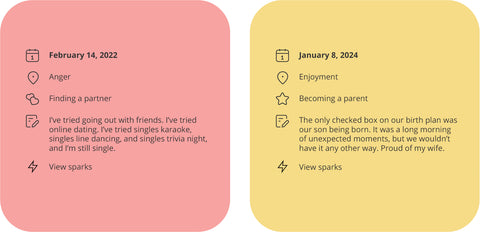
With awareness around mental health issues on the rise as the World Health Organization predicts that by 2030 depression is going to be the number one cause of global disability, more and more people are beginning to pay attention to their mental well-being. [31]
Americans’ mental health is in such bad shape that the US Preventive Services Task Force recently recommended that doctors screen every patient under 65 for anxiety. [32] And 90 percent of American adults say the US is experiencing a mental health crisis, according to a new poll from CNN and the Kaiser Family Foundation. [33]
988 Lifeline data for August 2022, the first full month of service from a national network of local crisis centers providing emotional support, showed a 45% increase in overall volume. [34] In its first five months they received over 1.7 million calls, texts and chats. [35]
In California, rates of anxiety and depression [36] among youth increased by 70% from 2016 to 2020.[37] At one Los Angeles County mental health clinic, [38] the wait time for therapy or scheduling an appointment with a psychiatrist was six to eight months. [39]
Untold numbers of families are dealing with myriad challenges finding and paying for mental health care, and then ending up in debt. There are too few therapists and psychologists in the U.S. — and fewer still who provide treatment paid for by insurance. [26] That compounds the financial toll on families.
Nearly one-third of Americans, or 31%, have worried about others judging them when they told them they have sought mental health services, [5] and over a fifth of the population, or 21%, have even lied to avoid telling people they were seeking mental health services. This stigma is particularly true for younger Americans, who are more likely to have worried about others judging them when they say they have sought mental health services (i.e. 49% Gen Z vs. 40% Millennials vs. 30% Gen X vs. 20% Boomers).
In the Surgeon’s General report on Culture, Race, Ethnicity and Mental Health, [40] ‘culture counts’ in mental health care, as it shapes how people seek help, engage in health behaviors, and how providers communicate with clients and deliver services. Culture is more than race and ethnicity, as it encompasses ‘a shared way of being and interacting’ [41] that shapes lifestyle patterns and structures human thoughts, emotions, interactions, social norms, and behaviors. [42]
"Our brains, our bodies, and our society have been evolving together to shape human development for millennia. ... Within the last 20 years, the advent of portable technology and social media platforms [has been] changing what took 60,000 years to evolve." Mitch Prinstein, the chief science officer at the American Psychological Association (APA), told the Senate Judiciary Committee, "We are just beginning to understand how this may impact youth development." [22]
Mitch Prinstein also noted, "Research suggests that young people form and maintain friendships online. These relationships often afford opportunities to interact with a more diverse peer group than offline, and the relationships are close and meaningful and provide important support to youth in times of stress." [22]
Comparing and contrasting yourself with your peers is part of identity formation. [20] This process helps people figure out where they stand in terms of beliefs, preferences, and attitudes.
People tend to automatically imitate others’ facial expressions of emotion. That reaction, termed “facial mimicry” has been linked to sensorimotor simulation—a process in which the observer’s brain recreates and mirrors the emotional experience of the other person, potentially enabling empathy and deep, motivated processing of social signals. [43]
Emotional expressions communicate four kinds of information: the individual’s current feeling (the expressive function of expression); what is happening in the present context (the declarative function of expression); desired courses of action from other people who perceive the expression (the imperative function of expression); and intention and plans about what the person might do (the commissive function of expression). [25]
The University of California conducted research into the effect of emotion tracking in behavioral change in an effort to measure whether emotion tracking has a direct correlation to improving the outcome of the patients. The study uncovered that raised emotional awareness reduced the persistence of bad habits and improved goals pursuit for a wide range of target goals. [44]
Dr Drew Erhardt, a clinical psychologist, says: “For those in treatment with a mental health professional, apps have the potential to increase the efficiency and efficacy of psychotherapy. They enable clients to collect data on various aspects of their functioning in a convenient, engaging way and to readily share those data with their therapist who can use that information both to inform what to focus upon in sessions and to gauge progress. Apps can also facilitate clients’ practice and mastery of a wide variety of cognitive and behavioral skills that are taught in therapy.” [45]
Additionally, health apps will allow your therapist to recognize patterns, work on skills to mitigate negative feelings you’re having, or give you homework to put those skills into practice. [46]
Approximately 65% of individuals describe themselves as visual learners, which correlates with the appeal of image-based rather than text-heavy social media. [28]
Current social media platforms “offer the 'empty calories of social interaction,' that appear to help satiate our biological and psychological needs, but do not contain any of the healthy ingredients necessary to reap benefits." [23]
Most social media algorithms and design “deliberately shape our experiences”, exerting “such a powerful pull on our psychology and our identity that it changes how we think, behave and relate to one another.” [47]
Social media divisiveness drives engagement, which in turn drives advertising revenues. Max Fisher, author of The Chaos Machine: The Inside Story of How Social Media Rewired Our Minds and Our World, recognizes the enjoyment of moral outrage is one of the key sentiments being exploited by algorithms devised by Google (for YouTube) and Meta (for Facebook, Instagram, and WhatsApp), which discovered they could monetize this impulse by having their algorithms promote hyperpartisanship. [48]
A Review of Mental Health and Mental Health Care Disparities Research: 2011-2014 [49] – The social ecological model (Stokols, 1996) recognizes that health is determined at the intrapersonal level (e.g., genetic heritage, personality dispositions, health practices), interpersonal level (e.g., relationships with family, social support networks, providers, patient navigators), organizational level (e.g., state and local health departments, insurance plans), community level (e.g., neighborhood risk factors, community-based organizations, employers), and policy level (e.g., state and federal insurance eligibility, mental health screening and treatment guidelines, immigration policies). [50]
American mental health services are insufficient, and despite high demand, the root of the problem is lack of access – or the ability to find care. Cohen Veterans Network President and Chief Executive Officer Dr. Anthony Hassan. “If we want to save lives, save families and save futures we must reimagine our behavioral health system and take concrete steps to improving consumers’ ability to find the care they need, when they need it, and on their terms.” [5]
[1] Ekman, P. (2023). Universal Emotions. Paul Ekman Group. https://www.paulekman.com/universal-emotions
[2] Liu, H. (2023, January). What is Psychiatry? American Psychiatric Association. https://www.psychiatry.org/patients-families/what-is-psychiatry
[3] Anxiety & Depression Association of America. (2022, October 28). Anxiety Disorders – Facts & Statistics. Anxiety & Depression Association of America. https://adaa.org/understanding-anxiety/facts-statistics
[4] National Institute of Mental Health (n.d.). Any Anxiety Disorder. National Institute of Mental Health. https://www.nimh.nih.gov/health/statistics/any-anxiety-disorder
[5] National Council for Mental Wellbeing (2018, October). Study Reveals Lack of Access as Root Cause for Mental Health Crisis in America. National Council for Mental Wellbeing. https://www.thenationalcouncil.org/news/lack-of-access-root-cause-mental-health-crisis-in-america
[6] Javadi, D., Feldhaus, I., Mancuso, A., & Ghaffar, A. (2017). Applying systems thinking to task shifting for mental health using lay providers: A review of the evidence. Global Mental Health, 4, E14. doi:10.1017/gmh.2017.15
[7] Bhattacharjee, P. (2017, December 6). Orange: The color of warmth and comfort. CNN Health. https://www.cnn.com/2017/12/06/health/colorscope-orange/index.html
[8] St. Clair, K. (2017). The Secret Lives of Color. Penguin Books.
[9] Cohen, J., Onunaku, N., Clothier, S., & Poppe, J. (2005, September). Helping Young Children Succeed: Strategies to Promote Early Childhood Social and Emotional Development. National Conference of State Legislature’s Child Care and Early Education Project.
[10] National Scientific Council on the Developing Child (2004). Children’s Emotional Development Is Built into the Architecture of Their Brains (Working Paper No. 2). http://www.developingchild.net
[11] The University of Kansas Health System. (n.d.). Emotional Expression. The University of Kansas Health System. https://www.kansashealthsystem.com/health-resources/turning-point/programs/resilience-toolbox/emotional-expression/what-is-emotional-expression
[12] National Geographic. (n.d.). Waypoint. National Geographic Education. https://education.nationalgeographic.org/resource/waypoint
[13] Scott, E. (2022, May 10). Readability: The Optimal Line Length. Baymard Institute. https://baymard.com/blog/line-length-readability
[14] Neff, K. (2023). Why self-compassion is healthier than self-esteem. Self-Compassion. https://self-compassion.org/why-self-compassion-is-healthier-than-self-esteem
[15] Neff, K. (2011, June 26). Why Self-Compassion May Be the Antidote to Narcissism. Psychology Today. https://www.psychologytoday.com/us/blog/the-power-self-compassion/201106/why-self-compassion-may-be-the-antidote-narcissism
[16] Hill, J. (Director). (2022). Stutz. [Film].
[17] Taylor, J. B. (2008). My Stroke of Insight: A Brain Scientist’s Personal Journey. Penguin Books.
[18] Verduyn, P. & Lavrijsen. (2014). Which emotions last longest and why: The role of event importance and rumination. Motiv Emot, 39, 119 – 127. DOI10.1007/s11031-014-9445-y
[19] Steinbeck, J. (1062). Travels with Charley: In Search of America. Viking.
[20] Newport Academy. (2019, January 4). Social Media Comparison & Teen Mental Health. Newport Academy. https://www.newportacademy.com/resources/empowering-teens/theory-of-social-comparison
[21] Pfeifer, J. H., Iacoboni, M., Mazziotta, J. C., & Dapretto, M. (2008). Mirroring others' emotions relates to empathy and interpersonal competence in children. NeuroImage, 39(4), 2076–2085. https://doi.org/10.1016/j.neuroimage.2007.10.032
[22] Time Change: Protecting Our Children Online: Hearing before the U.S. Senate Committee on the Judiciary. 118th Cong. (2023). (testimony of Mitch J. Prinstein, PhD, ABPP).
[23] Turner, C. (2023, February 16). 10 things to know about how social media affects teens' brains. National Public Radio. https://www.npr.org/2023/02/16/1157180971/10-things-to-know-about-how-social-media-affects-teens-brains
[24] van Ginneken, N., Chin, W.Y., Lim, Y.C., et al. (2021). Primary‐level worker interventions for the care of people living with mental disorders and distress in low‐ and middle‐income countries. Cochrane Database of Systematic Reviews, 8. DOI: 10.1002/14651858.CD009149.pub3.
[25] Keltner, D., Sauter, D., Tracy, J. et al. (2019). Emotional Expression: Advances in Basic Emotion Theory. Journal of Nonverbal Behavior, 43, 133 – 160. https://doi.org/10.1007/s10919-019-00293-3
[26] Noguchi, Y. (2022, October 19). Paying for mental health care leaves families in debt and isolated. National Public Radio. https://www.npr.org/sections/health-shots/2022/10/19/1125446666/debt-mental-health-care-u-s-families
[27] Paul Wellstone and Pete Domenici Mental Health Parity and Addiction Equity Act, Pub. L. 93–406, title I, § 712 (1996).
[28] Lewallen, J. & Behm-Morawitz, E. (2016). Pinterest or Thinterest?: Social Comparison and Body Image on Social Media. Social Media + Society, I(9). DOI: 10.1177/2056305116640559
[29] Bandura, A. (2001). Social Cognitive Theory of Mass Communication. Mediapsychology, 3, 265 – 299.
[30] Steber, C. (2019, May 16). 9 Shocking Things That Happen To Your Brain When You Get A Phone Or Email Notification. Bustle. https://www.bustle.com/p/9-shocking-things-that-happen-to-your-brain-when-you-get-a-phone-email-notification-17869135
[31] World Health Organization. (2011). Global burden of mental disorders and the need for a comprehensive, coordinated response from health and social sectors at the country level. (Executive Board 130/9). World Health Organization. https://apps.who.int/gb/ebwha/pdf_files/EB130/B130_9-en.pdf
[32] Baldwin, R. (2022, September 24). What's Really Causing America's Mental Health Crisis?. National Public Radio. https://www.npr.org/2022/09/21/1124365508/whats-really-causing-americas-mental-health-crisis
[33] Lopes, L, Kirzinger, A., Sparks, G., et al. (2022, October). KFF/CNN Mental Health In America Survey. KFF. https://www.kff.org/other/report/kff-cnn-mental-health-in-america-survey
[34] U.S. Department of Health and Human Services. (2022, September 9). HHS Secretary: 988 Transition Moves Us Closer to Better Serving the Crisis Care Needs of People Across America. U.S. Department of Health and Human Services. https://www.hhs.gov/about/news/2022/09/09/hhs-secretary-988-transition-moves-us-closer-to-better-serving-the-crisis-care-needs-of-people-across-america.html
[35] Chatterjee, R. (2023, January 16). 988 Lifeline sees boost in use and funding in first months. National Public Radio. https://www.npr.org/sections/health-shots/2023/01/16/1149202586/988-lifeline-sees-boost-in-use-and-funding-in-first-months
[36] Esquivel, P. (2022, September 1). California students wait months for mental health counseling. The Los Angeles Times.
[37] The Annie E. Casey Foundation. (2022). 2022 Kids Count Data Book: State trends in child well-being. The Annie E. Casey Foundation.
[38] Garrison, J., Gutierrez, M. & Luna, J. (2022, July 10). California taxed millionaires to fix its mental health crisis. Why it’s fallen so short. The Los Angeles Times.
[39] Netburn, D. (2022, September 25). Does anyone else feel as if they’re drowning? Mental health is suffering. The Los Angeles Times.
[40] Department of Health and Human Services. (2001). Mental Health: Culture, Race, and Ethnicity: A Supplement to Mental Health: A Report of the Surgeon General. https://portal.ct.gov/-/media/DMHAS/OMHE/mhethnicitypdf.pdf
[41] Singer, M.K. (2012). Applying the concept of culture to reduce health disparities through health behavior research. Preventive Medicine, 55(5), 356 – 361. https://doi.org/10.1016/j.ypmed.2012.02.011.
[42] Guarnaccia, P., & Rodriguez, O. (1996). Concepts of Culture and Their Role in the Development of Culturally Competent Mental Health Services. Hispanic Journal of Behavioral Sciences, 18(4), 419–443. https://doi.org/10.1177/07399863960184001
[43] Birch-Hurst, K., Rychlowska, M., Lewis, M. B., & Vanderwert, R. E. (2022). Altering Facial Movements Abolishes Neural Mirroring of Facial Expressions. Cognitive, affective & behavioral neuroscience, 22(2), 316–327. https://doi.org/10.3758/s13415-021-00956-z
[44] Hollis, V., Konrad, A., & Whittaker, S. (2015, April). Change of Heart: Emotion Tracking to Promote Behavior Change. CHI '15: Proceedings of the 33rd Annual ACM Conference on Human Factors in Computing Systems. http://dx.doi.org/10.1145/2702123.2702196
[45] Collins, K. (2015, June 8). Moodnotes CBT journal wants to turn your emotions into data. Wired. https://www.wired.co.uk/article/moodnotes-app-cognitive-behavioural-therapy-ustwo
[46] Roy, J. (2020, December 23). What is therapy? A beginner’s guide to mental health. The Los Angeles Times.
[47] Parkin, S. (2022, September 22). The Chaos Machine by Max Fisher review – how social media rewired our world. The Guardian.
[48] Shaw, T. (2022, September 9). Review: How Social Media Influences Our Behavior, and Vice Versa. The New York Times.
[49] Cook, B. L., Hou, S. S., et al. (2018). A Review of Mental Health and Mental Health Care Disparities Research: 2011 – 2014. Medical Care Research and Review, 76(6), 683 – 710. https://doi.org/10.1177/1077558718780592
[50] Stokols D. (1996). Translating social ecological theory into guidelines for community health promotion. American Journal of Health Promotion, 10, 282-298.

